
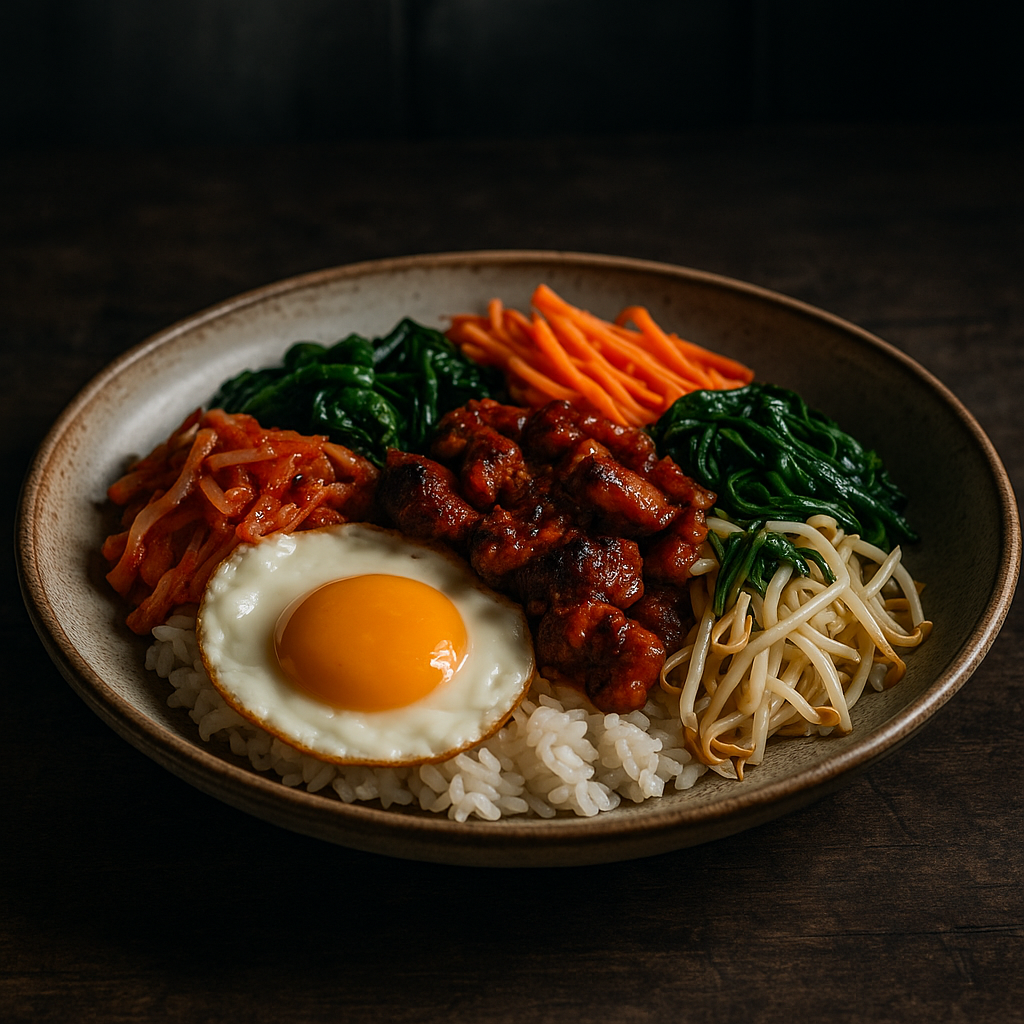
Street Food Lunch: Smoky Spicy Korean BBQ Bibimbap
Discover this modern twist on a classic Korean dish with our Smoky Spicy Korean BBQ Bibimbap recipe perfect for an unforgettable Friday-night tailgate or secret restaurant hack that tastes even better at home.
Allergens
Soy (in soy sauce and gochujang), Egg
Ingredients
- 8 oz thinly sliced ribeye steak
- 1 cup cooked white rice
- 1 large egg, fried sunny
- side up
- 1 cup julienned carrots and cucumber
- 1/2 cup bean sprouts
- 1/4 cup kimchi
- 1/4 cup gochujang sauce (Korean chili paste)
- 2 green onions, chopped
- 2 tsp sesame seeds
- 2 tsp cooking oil
- Salt and pepper to taste
Instructions
- In a large bowl, marinate the ribeye steak slices with gochujang sauce, garlic, soy sauce, sugar, black pepper, and a pinch of salt for at least 30 minutes or up to overnight.
- Preheat a cast iron grill pan or outdoor grill over medium high heat. Cook the marinated ribeye steak slices for about 1 2 minutes per side or until desired doneness. Set aside and keep warm.
- In a large bowl, combine cooked rice with half of the gochujang sauce (reserve the other half for dipping), julienned carrots, cucumber, bean sprouts, and kimchi. Mix well to ensure even distribution of flavors.
- In a non stick pan, fry an egg sunny side up and season with salt and pepper to taste. Set aside.
- Assemble the bibimbap by spooning the rice mixture into a deep bowl, then layering on top the cooked ribeye steak slices and the fried egg. Drizzle the remaining gochujang sauce around the dish for dipping. Garnish with chopped green onions and sesame seeds.
- Enjoy immediately while the dish is still hot, mixing everything together to create a perfect harmony of flavors and textures.
Chef’s Insight
The key to this recipe is marinating the ribeye steak well in advance, which infuses the meat with a rich smoky flavor that complements the bold tastes of the dish.
Notes
Adjust the spiciness of the dish to your preference by adding more or less gochujang sauce.