
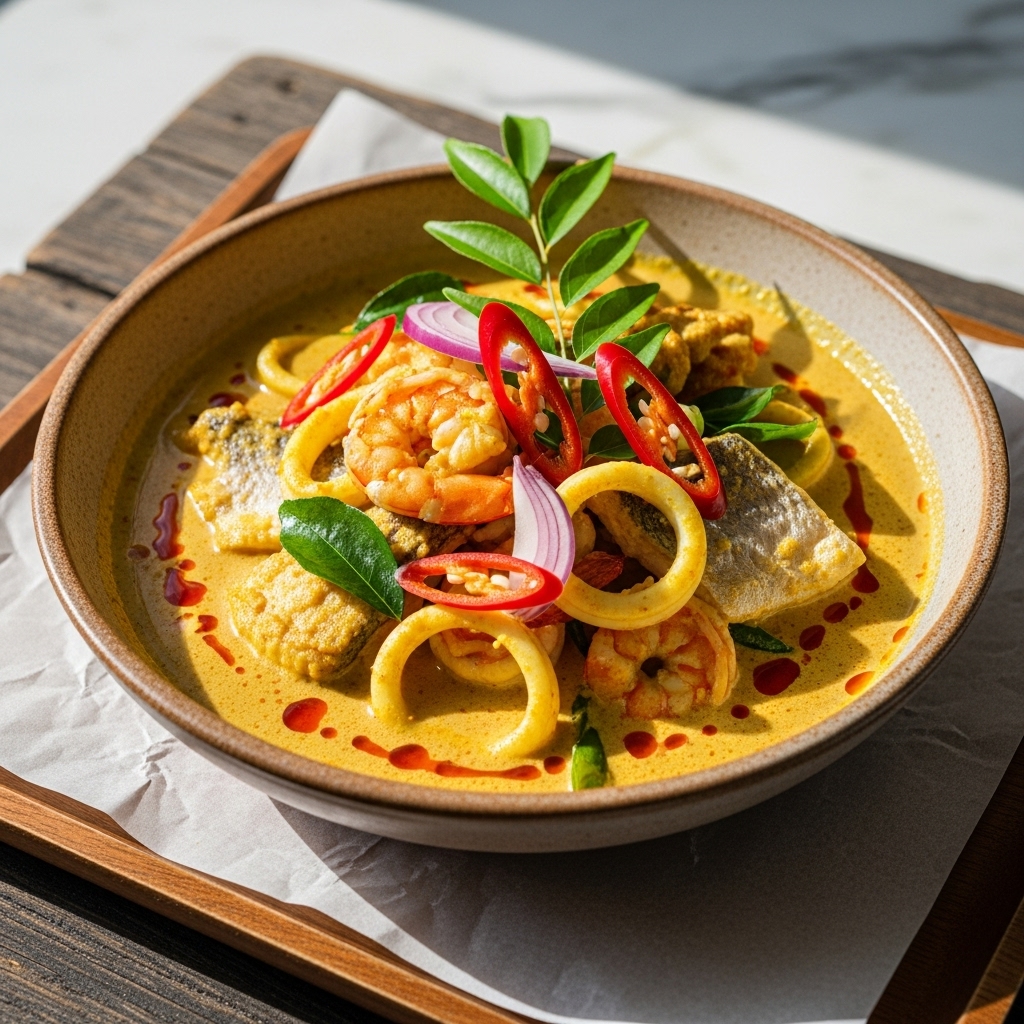
Indonesian Keto-Friendly Seafood Curry Bowl: A Sensory Feast for the Eyes & Palate
Discover an easy, delectable Indonesian keto-friendly seafood curry bowl that combines succulent shrimp and tender chicken with cauliflower rice in a fragrant coconut milk sauce, perfect for lunch or dinner.
Allergens
Shellfish, Tree Nuts (Almond Flour)
Ingredients
- 1 lb large shrimp, peeled and deveined
- 1 lb boneless, skinless chicken breasts, cut into bite
- sized pieces
- 2 cups cauliflower rice
- 1 cup coconut milk
- 1/2 cup almond flour
- 3 tablespoons coconut oil
- 2 tablespoons curry powder
- 1 tablespoon ginger, minced
- 1 tablespoon garlic, minced
- 1 teaspoon turmeric
- Salt and pepper to taste
Instructions
- In a large bowl, combine shrimp and chicken. Season with salt and pepper to taste. Set aside. In a separate bowl, whisk together coconut milk, curry powder, ginger, garlic, turmeric, and almond flour until smooth. Heat 2 tablespoons of coconut oil in a large skillet over medium heat. Add the shrimp and chicken, cooking for about 5 minutes or until cooked through. Remove from skillet and set aside. In the same skillet, add remaining coconut oil and sauté cauliflower rice for about 4 minutes or until tender. Gradually pour in the curry sauce, stirring constantly to combine. Bring to a simmer and cook for an additional 2 3 minutes, or until slightly thickened. Return cooked shrimp and chicken to the skillet, gently tossing to coat with the sauce. Cook for another 2 minutes to heat through. Serve immediately over cauliflower rice, garnishing with fresh cilantro if desired.
Chef’s Insight
Use high-quality spices for an authentic Indonesian flavor profile.
Notes
Adjust spiciness to taste by adding more or less curry powder.