
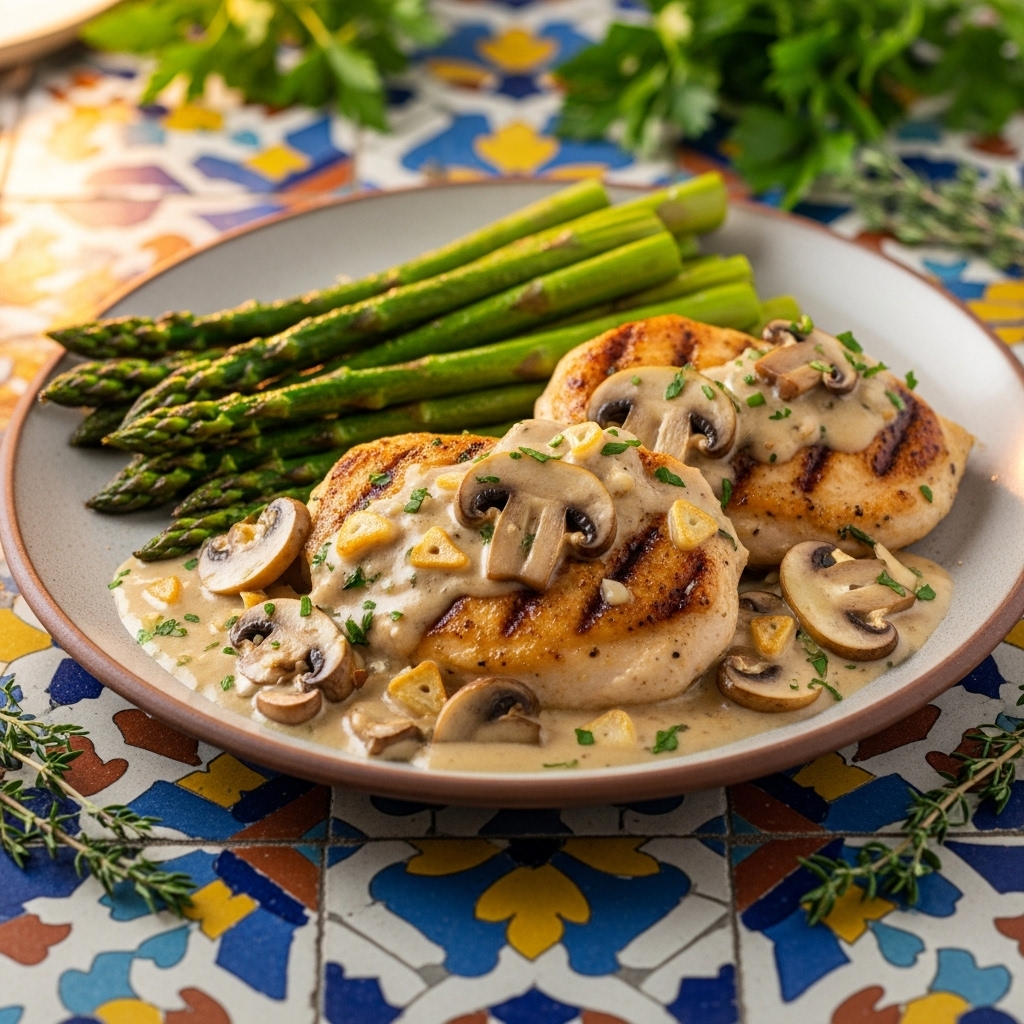
Keto Chicken Marsala with Garlic Cream Sauce and Roasted Asparagus
A flavorful english lunch perfect for keto eaters - made for visual appeal and culinary depth.
Allergens
Dairy (Milk, Butter) - Tree Nuts (None) - Peanuts (None) - Fish (None) - Shellfish (None) - Soy (None) - Eggs (None)
Ingredients
- 2 lbs boneless, skinless chicken breasts
- 1 cup dry Marsala wine
- 1 cup heavy cream
- 4 tbsp unsalted butter
- 8 oz fresh asparagus
- 1 tsp garlic powder
- Salt and pepper to taste
- 1/2 cup grated Parmesan cheese
- Fresh parsley for garnish
Instructions
- Cut the chicken breasts into bite sized pieces and season with salt, pepper, and garlic powder.
- In a large skillet, melt 3 tbsp of butter over medium heat. Add the chicken pieces and cook until browned on all sides. Remove from the skillet and set aside.
- In the same skillet, add the Marsala wine and bring to a boil. Cook for 5 minutes or until reduced by half.
- Lower the heat and stir in the heavy cream. Allow the sauce to simmer until it thickens slightly. e) Add the cooked chicken back into the skillet and cook for an additional 2 3 minutes, allowing the flavors to meld. f) In a separate oven safe dish, toss the asparagus with remaining butter and seasonings. Roast in the oven at 400°F (205°C) for 10 12 minutes or until tender. g) Plate the chicken Marsala, top with Parmesan cheese, and garnish with fresh parsley. Serve alongside the roasted asparagus.
Chef’s Insight
To enhance the aroma and flavor, add a pinch of fresh thyme or rosemary to the Marsala wine reduction.
Notes
For a Keto-friendly meal, avoid breading the chicken or using bread to thicken the sauce.