
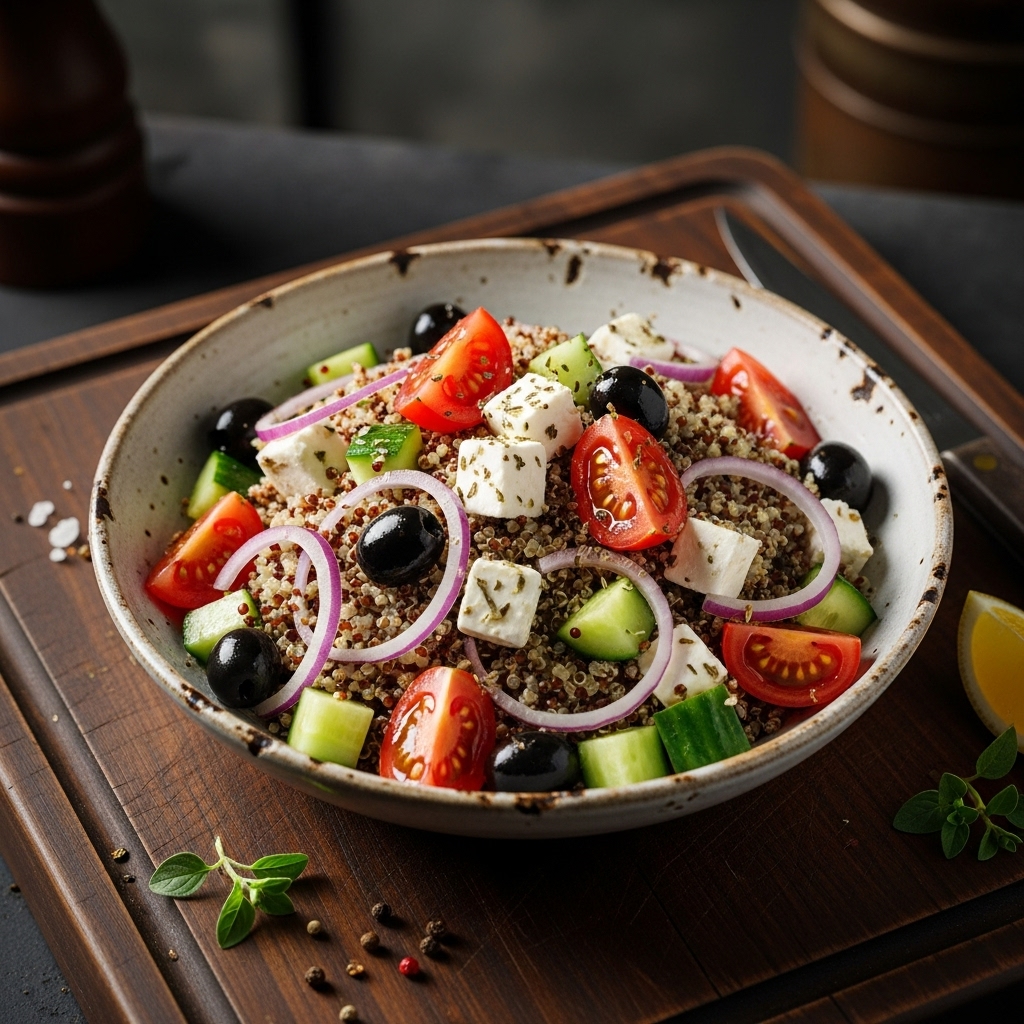
Revitalizing Greek Quinoa Salad Bowl
This refreshing and nutritious Greek quinoa salad bowl recipe is perfect for those seeking a healthy and energizing meal. With its combination of protein-packed quinoa, vibrant vegetables, and tangy feta cheese, this dish will leave you feeling revitalized and ready to take on the day.
Allergens
Dairy (Feta Cheese)
Ingredients
- 1 cup uncooked quinoa, rinsed and drained 2 cups water or vegetable broth 1/2 English cucumber, diced 1 pint cherry tomatoes, halved 1/2 red onion, finely chopped 1/4 cup Kalamata olives, pitted and halved 1/2 cup crumbled feta cheese 1/4 cup fresh dill, finely chopped 1/4 cup fresh parsley, finely chopped 3 tablespoons olive oil 2 tablespoons red wine vinegar Salt and pepper to taste
Instructions
- In a medium saucepan, combine quinoa and water or vegetable broth. Bring to a boil, then reduce heat to low, cover, and simmer for 15 minutes or until the quinoa is cooked and has absorbed all the liquid. Remove from heat and let it stand, covered, for 5 minutes. Fluff with a fork.
- In a large bowl, combine cucumber, cherry tomatoes, red onion, Kalamata olives, feta cheese, dill, and parsley.
- Once the quinoa has cooled slightly, add it to the vegetable mixture and toss gently to combine.
- In a small bowl, whisk together olive oil, red wine vinegar, salt, and pepper to taste. Pour dressing over the salad and mix well.
- Refrigerate for 1 hour before serving to allow flavors to meld.
Chef’s Insight
This revitalizing Greek quinoa salad bowl is not only delicious but also packed with nutrients, making it the perfect choice for those seeking healthy and tasty meals.
Notes
This dish is a perfect example of the Mediterranean diet's emphasis on fresh vegetables, whole grains, and lean proteins.